[00:00:00] Speaker A: Various data providers are saying that private equity, dry powder or uncommitted capital is at an all time high and these private equity companies are increasingly hungry for publicly traded companies.
[00:00:17] Speaker B: I am Reese Tisdale and this is the future of water which we talk about. All the ways which companies, utilities and people are addressing the challenges and opportunities in water.
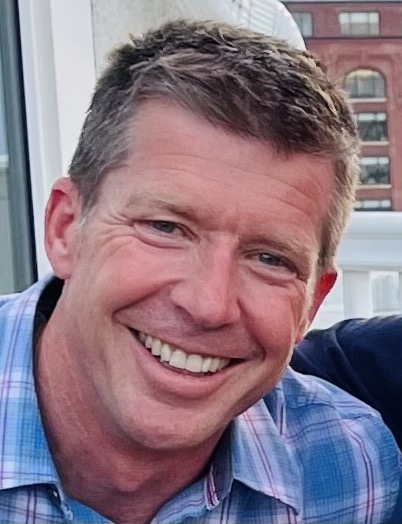
This is episode 81 and I think it's going to be a good one. Today I'm going to be joined by Bluefield Senior analyst Ethan Edwards, who's been quite honestly the busiest man on campus. He's coming off a series of research notes on M and A transactions webcast for clients on global trends and M and A, who's buying, who's selling and where is the activity happening? But also more recently and part of this, he's done some research on a couple publicly traded Canadian companies that have been taken private in recent weeks.
So what does that mean? Where's the market heading? Whether it be the broader market as a whole, market uncertainty, what are investors thinking and doing? But also does that apply to the water sector? So talked to Ethan about that and I'm sort of grabbing him really at the end of the week before he heads off to Houston for the Oil Field water conference on November 2nd. Houston. So he'll be speaking at that event. And just as a reminder, as I've said before, Eric Bindler from Bluefield Research Director will be speaking at Xylem Reach in Orlando on November 5th to the 8th. Bluefield's team out of Europe, a number of them will be at Aquatech Amsterdam. We'll have a booth there on November 6th through the 9th. So that's a great opportunity to talk to our consulting team, to talk to some analysts, to talk to our sales team.
Any way, in every way we can help you out. A lot of the information will be there.
So good opportunity for all those who are in Europe or planning to be in Europe. Then lastly, I will be at the Rockwell Automation Fair with Ethan. We're both moderating panels at that event in Boston on November 6th to the 9th. So once again, lots of opportunities. We look forward to seeing you there. But in any case, the hits keep coming, so don't miss the opportunity to hang out with me and my colleagues. Had a great week at World Water Tech in Los Angeles this past week. Really great meetings, great panels, lots of discussions about everything from decarbonization in the water sector. What role does it play?
Pfas. Really excellent conversation about pfas.
I moderated a panel on California and what can we Learn from California and what's happening there when it comes to what's water scarcity, drought, atmospheric rivers. So thanks to everybody that I met with in California. One for the meetings, for the dinners, for the coffees, et cetera. So good time, really helpful, good quality event. So with that being said, let's. Let's bring Ethan into the conversation and see if we can talk a little bit about M and A. I think he's got some good insights.
All right, so I'm joined here by Ethan Edwards. Ethan, how's it going?
[00:03:22] Speaker A: It's going well. Halloween is right around the corner as we're recording this podcast, so there's that to look forward to. And of course, it's the fall, so you can't complain.
[00:03:31] Speaker B: I mean, in the intro I was saying how busy you were. You even put together a pumpkin painting contest in the office. So if you're on our social media pages for Bluefield, you might see some images come Halloween on what some of the artwork look like.
[00:03:46] Speaker A: Yeah, unfortunately, mine is not one of the better looking ones, so I'll let you know that.
[00:03:51] Speaker B: Well, you're in good company. So mine, mine kind of stunk too. But hey, it's about being together and having fun and a good laugh. But some people put some amazing pumpkins together. But one of the reasons I wanted to bring you, or the reason I wanted to bring you into this conversation is because there have been some deals that have been happening. You cover the M and A service, you just gave a webcast to clients on global trends. But really the catalyst was partly my excitement when I saw that one, H2O Innovation was acquired by Ember private equity firm. And then soon thereafter, I think a week, maybe two weeks ago, Blue Wolf Capital has acquired Logistech, who's the parent company of Ultra Water Solutions.
So these are, you know, it's a little unique. Maybe I'll. I'll lay it, let you lay it out and add anything that I know on those deals. But why don't you give us a little bit of background, sort of like time wise, what's happened and what are these. What are these deals? What do they entail?
[00:04:57] Speaker A: Yeah, so these deals are pretty much, I guess you could say they're hot off the press. Both of them happen in October, so very recently. And going chronologically, the first one happen on 2 October, Ember Infrastructure announced it would acquire H2O Innovation, which is a Canadian water solutions provider.
And essentially the company is being taken private at a 68% premium to their current share Price, which values the company at around US$276 million. And so H2O Innovation, they operate with three primary business segments. They've got their water technology systems, their specialty products, and then operation and maintenance services segments. And so looking at their business, the core of their business in recent years has really been their O and M services unit. They've got a portfolio of 131 O&M contracts across 11 states. And so that really means O and M is their primary revenue source. That's accounted for roughly 46% of their total in 2023.
And so partly because of the O and M, the company has a high percentage of recurring revenues, which I'm sure was very attractive to private equity investors looking in.
And then a few weeks later, on 16 October, logistic, another Canadian company, entered into an agreement to be acquired by the PE firm Blue Wolf Capital Partners alongside the infrastructure investment firm Stone Peak. And so that deal valued the company at $874 million, which was also around a 61% premium to logistic stock price at the time.
And we care about the logistic deal because they're the parent company of water solutions brand Altra. Altra provides four primary water solutions. They're in infrastructure rehabilitation, pfas, remediation, lead pipe solutions and flexible fluid transportation. And so we at Bluefield, we view all of these areas as high growth areas in water. So it's interesting how they're sort of active only in these high growth areas.
[00:07:08] Speaker B: Yeah, I think that what's interesting also is, I mean, well, interesting altar for those who don't know. I mean they, they've rebranded in recent years. It used to be Synexin, so they've been going through sort of a rebranding process recently.
But there is a coincidence, I think it's a coincidence that they're both Montreal based. Right. And they've both been taken private. What can we take away from these deals as a whole?
[00:07:34] Speaker A: So one of the things that I'm personally very interested in is the private equity angle. So there's significant capital that's sort of sitting on the sidelines that's waiting to be deployed. Various data providers are saying that private equity dry powder or uncommitted capital is at an all time high. Essentially they're sitting on a lot of money that isn't invested. And these private equity companies are increasingly hungry for publicly traded companies like H2O Innovation and logistic and interested in taking them private.
And like beyond these recent two deals, 2023 has seen a slew of other take private water deals which include JF Lehman taking crystal clean private GI partners acquiring Atlas Technical Consultants and then a couple others as well. And so prior to 2023, this take private deal flow was much more intermittent. And the last notable one that we have is New Mountain Capital's 2021 Aegion acquisition.
So I think part of this, in addition to that uncommitted capital, is that there's sort of a shifting of sentiments in the public equity market.
Over the last couple of years, the top 50 publicly traded water companies that we track, they've seen average stock price declines of around 8%. And that's roughly in line with the broader S P's overall decline over the same period.
And I think from a company being targeted point of view, I think private equity investors and investors in general are really interested in service companies within water, largely in part due to their water recurring revenues. So for example, H2 Innovation, they offer O and M services, a lot of those are recurring revenues. And then Altra, they offer PFAS solutions in a water as a service model, which is also recurring revenue subscription kind of model.
[00:09:29] Speaker B: Yeah, no, I think that's really interesting. I mean, you know, to the H2 innovation piece. I mean they're one of the relatively larger players in that space, pretty active in southern US they're up against companies like inframark to some extent. You know, Violi is obviously a big player Jacobs.
So watching what they do is really interesting. I know. And in fact, in fact I think, you know, they do have quote unquote, you know, framework agreements with acquisitive investor and utilities as well. I mean, the Altra piece and PFAS is interesting actually coming away from World Water Tech this, this week. I just came off the red eye from LA actually and one of the discussions that was had was about PFAS and sort of the innovation that's happening actually at landfills. And that's. I know that that's a place or an area or segment in which Altra is active.
They have a technology solution that actually came from other practices and they've now applied it towards PFAS and seem to be successful. And then you also mentioned Aegion and New Mountain Capital. They also do trenchless pipe rehabilitation as well. Altra does. So it's interest, there's somewhat diversified, interesting business.
But these are relatively big deals. I mean, you're talking, you know, valued at 276 million.
You know, these are not. When we look at the water sector as a whole, it's sort of like I think maybe even you mentioned in the webcast, there's almost like a dumbbell, right. You get small deals and you get big deals, but we're starting to see some large ones. Is this a trend? What's your, what's your perspective on that?
[00:11:10] Speaker A: Yeah, I think it's, I mean if you look at the water sector, it is sort of a dumbbell, barbell, hourglass shaped market, where you want to phrase it. It's essentially you've got a lack of a middle class or medium sized targets. That's a feature of deal phone industry.
In our M and A data that we have, you know, where we've tracked over 2,600 deals over the last eight years or so. Only roughly 18 to 20% of our deals fall in a $25 million to $75 million range. And so because of this, strategic buyers in water that are looking for different companies to acquire are often finding themselves competing with financial investors. And you know, it's a crowded space. So I think it's not surprising that there are big deals happening at the larger end, especially with all the competition happening.
[00:12:03] Speaker B: Yeah, and it's true. I mean I think even, you know, when it comes to the logistic deal, I know, I believe, you know, that Blue Wolf, they actually outbid cdpq, the pension plan or Canadian pension plan that was, they were looking at it as well. So I mean there are. And what I'm getting at is when you're a large investor, a large company, a big deal is nice to have a platform, so to speak. Right. And I don't know if you know, that's, that's an area in which, you know, there are a lot of companies, particularly for new market entrants, particularly your private equity that, you know, looking for something in which they can build on. New Mountain Capital did that with and for Mark and then to some extent with AGN as well. So let's just step back even further and we've been down in the weeds a little bit on these two deals. What are some of the broader trends that may be impacting water M and a deal flow as a whole and maybe how's the water sector as a whole doing and is it an attractive market to get into?
[00:13:05] Speaker A: Yeah, I mean, I think we have a really good pulse on this because every quarter we sit down we go through the financial results and the quarterly call Transcripts of top 50 publicly traded water companies. And I mean it does take some time, but we are able to get really interesting insights from it. And I Would say overall the water sector is faring decently well. I mean the last quarter that we went through it and we'll be iterating it again in around a month so.
Like 38 of the 50 companies that we track reported increasing revenues in their water related businesses and growth is moderating down. Around a year ago it was on average 18 year over year growth which is pretty high. And that's moderated down to around an average of 10% among the water companies.
So the sector is still growing.
When we do hone in on the individual segments, there is a little bit more variation. So for example, our network and distribution group of companies, they are suffering more due to supply chain challenges and really it's due to like a slowdown in the construction sector. So in that segment, five of the seven companies we tracked reported decreasing water revenues.
So another interesting thing that we can take away from the analysis is that companies are still pursuing m and a. Eight of the top 50 companies explicitly said we're going after companies are in the late stages of acquisition.
And I mean one notable example to point to would be Veralto which just spun out of life sciences and biotech company Danaher. So they're going to have their own basically primary water quality focus going forward instead of a life sciences and biotech sort of company shadow over them. And so that should give them more clear growth opportunities to build down the line.
[00:14:53] Speaker B: Yeah, and I think even back to logistic, I think Blue wolf was saying that they were going to deploy $200 million towards M& A and growth and, and that'll be primarily U S focused I believe maybe Canada as well. So you know, there are dollars going towards more M A and we've seen that particularly as they, once the private equity players in this case come in, then they start looking for adjacencies. So if you're an OM player, maybe you start looking for, you know, SCADA system integrator companies, you need to start rolling those up.
So it'll be interesting to see how that plays out. Well, where might investors as we talk about them, where might they find some opportunities in water? What should they be thinking about?
[00:15:38] Speaker A: Yeah, so we do honestly in my opinion a great job of covering the opportunities in water. A lot of it comes through our market forecasts where we sort of hone in on individual market segments, estimate the size, see how they're growing and a few select markets that. And our eyes are heating up our PFAs, semiconductor, water management, Artificial intelligence, infrastructure repair and water reuse. And so just taking One of those. For example, in pfas, we've recently doubled the expected cost of remediation in the United States based a lot on the EPA's recently proposed regulations, in addition to the windfall for public water utilities from the 3M settlement to a total of around 13 and a half billion dollars end of the decade. And then similarly in reuse, we're seeing a big trend of end users looking to mitigate risk from relying solely on utilities.
And especially with water scarcity being a bigger concern, there's a lot more momentum for onsite solutions like leakage management and water recycling.
[00:16:40] Speaker B: Yeah, I think, you know, it's interesting to see what's happening like in just in my conversations I've been, I think, as some of the podcast listeners may know, I've been on the road a bit. One meeting with clients on site, but also just at conferences as well. There are questions about the IIJA funding. Where are those are provide. And you look also at the financial reports, 10Qs, 10Ks.
So many of them, those that are active in the us particularly the engineering companies, really do discuss IIJA and what's happening. So that the perceived tailwinds from that. Now it varies. The engineering and design companies seem to be pretty active, whereas maybe the contractors are still sort of waiting for those dollars to roll through, wondering where is the blip. Had an interesting conversation with someone just the other day in Los Angeles. We were talking a little bit about, you know, exactly that, where are the dollars? And you know, there's obviously a need.
Infrastructure rehabilitation repair is absolutely huge in the US but one of the challenges is that a lot of these projects, maybe where this dollar is going, they've been sort of in design and planning for a long time. And I think their suggestion was, in fact, you know, you need to get out. And even if you don't have the dollars, you need to sort of get the train rolling. So when those dollars hit the street or when the awards are given or when you need to apply, it's a, it's a, it's more closer to seamless than it would be otherwise because if you start from scratch at application, it's a little bit harder. So when you're, particularly when you're talking about SRF funds and such. So we'll shift gears a little bit and start. Let's talk some companies for a second. So who's making all these deals? I mean, you track it quarter to quarter globally across a number of different segments. Yeah, who, who are the, who are the busy players?
[00:18:35] Speaker A: Well, Definitely. I mean, I think that's a great thing we do in the service. We classify a lot of the acquisitions into different segments and when we break it up by segments, we, I mean they're acquisitive companies in every segment. I mean you were just sort of talking about engineering companies, so I guess we can highlight one there as an example. Rsk, they've sort of led the pack in recent years. They, they've been fueled by a over a billion dollar loan from Aries Management. And I mean in the last five to seven years they bought 20 water pure play companies.
They've grown their water related revenues to a third of their total business.
And for them a big part of it has been like geographic expansion. So they've expanded in Australia through Pensar infrastructure and also in the UK and Asia Pacific through their Vinnie's acquisition.
And that's something that we do see in our M and A database as a whole. Like when we break out the buyers and the targets by geographies, we see that oftentimes the buyers are in a different geographic location than target, which is an indicator of geographic expansion as a whole.
And so I think another trend that we can pull out is that oftentimes, you know, companies are buying other companies in the same segments, you know, equipment providers, they're looking for other equipment providers to round out their own equipment and product portfolios. And then engineering companies like rsk, they're buying other engineering companies to extend their own geographic footprint.
[00:20:10] Speaker B: Yeah, so yeah, I mean this is great. And you know, you've done a lot of this research, so you've become a good resource on this. So you know, maybe a last question.
Private equity players, they're emerging as key players in the water space.
Why private equity? What's the, what's, what's behind their cause, so to speak?
[00:20:31] Speaker A: Yeah, I mean water is an increasingly exciting field. I mean, whether it's because it's an essential services field that we all rely on, it's a little less prone to downturns, or maybe it's like a ESG push from a climate related field. It's an increasing area of interest for all kinds of investors, private equity included.
And I would say that there's competition is heating up. There are more and more private equity companies looking to get into water. There are already a number that are active.
And so the space is starting to become more and more crowded. And so when we look at how traditional private equity players operate, the traditional model is to hold the company for three to five years, grow it organically or inorganically through acquisitions and then seek an exit. And so within the water industry that is somewhat of a slower moving market, sometimes due to its reliance on municipal sales cycles, sometimes the private equity companies are holding their portfolio companies for longer.
So we have a digital water M and a focused report that's coming out in the next month or so. And what we found is that looking across 27 private equity firms, they held their digital water companies for an average of five and a half years. And so it's an increasingly active space, private equity is increasingly interested and I mean there are a lot of different targets and a lot of active firms that are very exciting to keep track of.
[00:22:00] Speaker B: Yeah, I think the, you know, I think you touched upon it. You know, the digital space is somewhat unique and actually in some respects more closely aligns with sort of that traditional like high growth. You know, they're looking for something with an inflection and a quick upturn that may or may not happen. We saw what happened with like EQT and actually a, I believe it was AEA who acquired Severance Trent and then turned it in just by branding, turn it into Inframark and then they turned it around and sold it really quickly.
Those are somewhat unique in just how they accelerate. Whereas, you know, more traditionally the water sector, I think you're right, it's a slower growth, so sometimes it requires a bit more patience. And so, you know, expectations in many cases need to be tempered when they come in partly because of the sales cycle. And I think you're right. I mean we get a lot of questions or when private equity firms have been coming to us, they talk about, oh, we've got sort of our initiative clean tech or ESG push. I agree with you. And that's sort of. So therefore waterfalls into that space. And therefore they are actively looking for, you know, service models and other ways to address whether it be water, wastewater, muni or industrial.
So it's really interesting.
So Ethan, you. We've got research coming out, you know, I know we've got something is coming out on logistic on that deal. We already put something out on H2O innovation and that deal. Research note you've done a webcast apart from that and being in Houston next week to talk about water and oil and gas. What else you got going on?
[00:23:47] Speaker A: Busy on the research side. I guess a couple things to highlight is we're taking another look at Japanese trading houses. So we'll hopefully have a report on that out before the end of the year. And then also we definitely have to go back through these top company earnings in our next iteration. So that is going to be the next big task.
[00:24:06] Speaker B: Yeah, that's become a good exercise for us. And it's, you know, the reason it started was partly during the beginning of COVID we started looking at the companies to understand what sort of, what were the pain points of these publicly traded companies? You know, is it China, was it material prices and supply chain workforce management? You know, now we're starting to see a little bit depending on the vertical or where they are on the value chain. Is it things like pfas, things keep bubbling up in those public filings. So it's good, good source of information just to get a perspective on what the, what the trends are and what the larger companies are thinking. We keep adding companies as well. So whether it be not just in the US but also globally. So I know what work goes into that and you know, how much time it takes to go through the filings, reading through the notes and such. But this is great stuff.
And for those who don't know, we did just put a webcast out on someone. There's a bit of an overlap with the webcast to clients recently with slides and more details. So if you are interested in that, you can always reach out to
[email protected] and Ethan is well aware of that information. So there are questions that come up. They'll be directed to him. So, Ethan, thanks a million. It's Friday and hopefully have a great weekend.
[00:25:32] Speaker A: You do the same.
[00:25:33] Speaker B: All right, take it easy.
All right. That was fantastic to have Ethan jump on. I know he's got a lot going on, like I said, but he's got some good perspectives and is definitely upbeat about what's happening in the sector. So thanks to Ethan.
Before we sign off, if you're in Boston or Barcelona, let us know and we'd enjoy the opportunity for a meeting. And I'm not gonna lie, we've had so many people come to our office because of this conversation or the statement that I'm making. So, hey, don't be the only one who doesn't take advantage of it. We're around. We've had great conversations. We're with clients, Prospects, people from D.C. it's been a really good way to reach out and meet in person.
As always, please subscribe to the Future of Water podcast. Give us a review. All it takes is a press on 1, 2, 3, 4, 5 stars. Pretty easy. It helps us help you. It also helps us spread the news and the word about water.
If you have any questions, comments or topic ideas, reach out to us@water expertsluefieldresearch.com we're doing this for you. And lastly, tell a friend about it.
So this podcast and these water industry insights have been brought to you by the one and only Bluefield Research.
To learn more about us, Visit
[email protected] until we talk again. Be well, be safe, and take care.